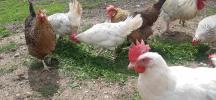
 There are 4 photos In general, it is quite easy to distinguish between a healthy and unhealthy egg, and it is especially necessary to make such a distinction because we live in a world in which, in the race for profit, quality is often forgotten, that is, quantity is preferred. To be able to make a difference, we first need to know that hens can be kept in cage systems, can roam (free-range) and they can graze, so depending on this they produce eggs of different quality, and of course the best eggs come from pasture raised hens. 1. In the first category, in cage systems, the hens are fed soybeans, corn, concentrates, chemicals are added to artificially darken the yolk and as a result of this many eggs get a dark orange or even red yolk colour. Here, too, the eggs are waxed with various oils after washing to prevent them from spoiling quickly. In these eggs, compared to ours from pastured hens, cholesterol is 3 times higher, omega-3 acids are 3 times lower, and omega-6 inflammatory (harmful) acids are even 10 times higher, they have lower levels of vitamins and minerals. 2. The second category, where chickens can roam freely (free range), is a slightly better category than those that are kept in cages, but they still lay far lower quality eggs compared with those chickens that have the opportunity to graze throughout the day. In this category, the problem arises when a larger number of hens start to be kept in a smaller space, so overcrowding occurs and here we get a scenario of a larger cage in which too many hens are kept. Since in this category the ground is bare, without grass, it is about a smaller space through which the chickens can roam and so the possibility of finding insects, worms is smaller, many poultry breeders, in the absence of their own resources to create their own food mixture with which they would improve the egg production, they decide to buy various concentrates that they add to the chickens' diet. The problem with the concentrate arises because there are such concentrates that contain antibiotics, so in a situation where many farmers cannot properly interpret the concentrate contents, lacking information about the dangers of such concentrate application in the chickens feed to our health, they apply them and mix them with the food that they usually give to their chickens, which unfortunately can lead to bacterial infections having a greater resistance to our anti-bacterial treatments. 3. The third category includes pastured hens that lay optimally healthy eggs in a natural (organic) way, and our chicken ladies belong to this category. Here, the chickens graze, roam from early morning to late evening until they enter their coop by themselves (not being forced to do so). In this category, the application of concentrates is out of question because there is no need to add concentrates (which are not cheap), the chickens meet their nutritional needs from grazing and hunting insects, and in our situation because we have technological equipment to generate feed, we easily make our own mixtures of sunflower meal, rapeseed meal and sunflower with which we meet all the other protein needs of our chickens. Our poultry diet is 90% based on cereals, so some of the eggs can look like those from Africa, with a whiter yolk, due to the bright pigment of the cereals, depending also on how much grass they have eaten. Chickens that would eat more grass get a yellow yolk, but those that focus more on grains tend to have a whiter yolk. There are many ads in which people sell domestic eggs, but unfortunately most of them are far from good quality eggs. In order to be on the safe side, before buying eggs, one should first analyse the place from which the eggs are to be bought from to make sure that they are not eventually resold from commercial farms, which can be the case; one should make sure if there are really chickens there, whether they can roam, pasture or grass is supplemented to them. Concerning those who claim that feed their poultry with grains, without concentrates, usually some eggs can have a whiter yolk or have a white dot in the centre of the yolk. Apart from grass, the colour of the yolk can also be affected by alfa alfa, which can be found in pelleted form and which is an ideal solution to add to the diet of chickens in winter days when there is not enough grass areas, having in mind the fact that alfa alfa is rich in omega 3 acids and proteins. In order to make things transparent, we regularly publish videos in which our chicken can be seen, the eggs, the grass and the food they eat, the location of the farm on Google Maps can also be seen and anyone can come by, visit us and see for themselves that things are as they have been said. 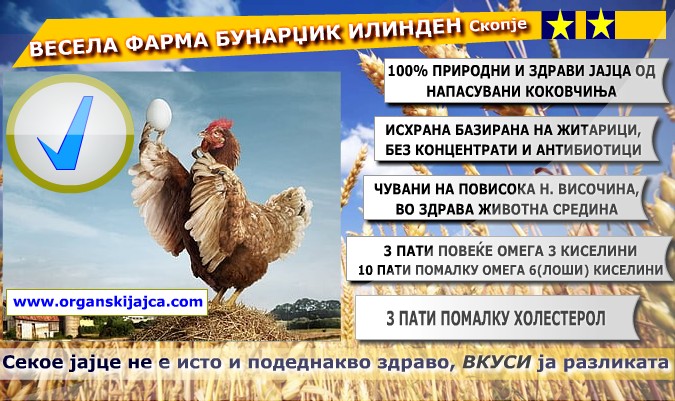 Other links!
 |
All rights reserved © organskijajca.com |