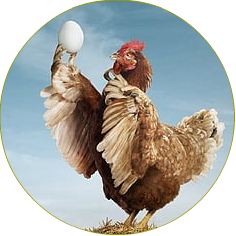
 There are 1 photos Eggs contain omega-3 acids (good) but also omega-6 acids (bad, inflammatory), and the levels of these acids can vary significantly depending on how the chickens are raised and fed. Thanks to the fact that our hens have the opportunity to roam, graze, hunt insects and worms throughout the day from early morning until dark, they have 3 times more Omega-3 acids compared to eggs obtained from commercial farms or domestic eggs obtained from hens that do not have opportunity to graze constantly. The secret to the Omega-3 acid difference, which many people don't know, lies in the grassy areas and greens that chickens graze on. Many domestic eggs can be found on the market, but they have the same characteristics as those obtained from commercial farms because the hens do not have the opportunity to graze and are not supplemented with grass from mowed areas. In our farm, apart from having enough grass for the chickens to graze on, we regularly add grass from mowed areas, which contributes to a drastic enrichment of the eggs with Omega-3 acids, even by 3 times, but also to a drastic reduction of harmful and inflammatory Omega-6 acids, even by 10 times. According to a study done in the United States of America, 3 eggs from pastured hens have the same content of Omega-3 acids as a 90-gram serving of wild-caught salmon. From this arises our motto that EVERY EGG IS NOT THE SAME AND EQUALLY HEALTHY, TASTE THE DIFFERENCE!  Other links!
 |
All rights reserved © organskijajca.com |